
Where to play tennis in Peru: how to find and book a court
From your phone to a real racket: how to find a tennis court near you in Lima and the rest of Peru, book it online, find someone to play with and pick a surface.
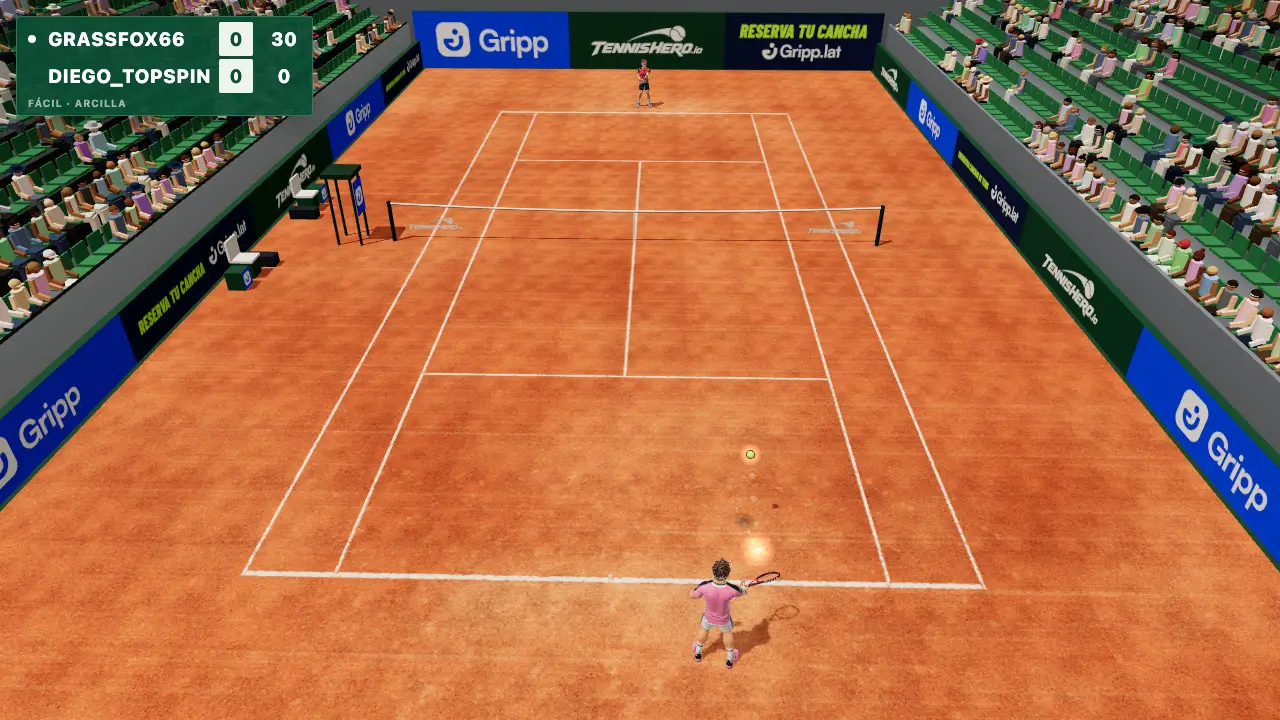
TennisHero gets you playing with your phone as the racket. If a few matches left you wanting to step onto a real court, this guide is for you: where to find a tennis court in Peru, how to book it, who to play with and what to expect from each surface.
The quickest way is to search on Gripp, TennisHero’s official sponsor: a Peruvian platform that brings together tennis and padel courts from all over the country. As of November 2026 it lists more than 190 courts in 34 cities. The site is in Spanish (“canchas” means courts).
How to find a tennis court near you
- Open Gripp’s tennis courts in Peru. Only tennis courts are listed there.
- Pick your city. Each club has its own page with address, phone number and opening hours, and tells you whether its courts are covered or outdoors.
- Check how to book. At clubs with online booking you book right there, in seconds and without creating an account. For the rest, the page gives you the club’s contact to book directly.
A tip: weekends and weekday evenings are the busiest times. If you can play early or mid-afternoon, you’ll find more free courts.
Tennis courts in Lima
Lima has most of them: more than 100 tennis and padel courts on Gripp. There are clubs and academies in Santiago de Surco, La Molina, San Isidro, Chorrillos, Barranco, Miraflores and other districts. To see prices and times and book courts in Lima, filter by your district and compare the ones close to you.
If you’re just starting out, Gripp’s guides to tennis courts in Lima and tennis lessons in Lima (in Spanish) can help too: a few lessons with a coach save you months of bad habits.
In the rest of Peru
You don’t need to be in Lima. Gripp also has courts in Arequipa, Trujillo, Tacna, Piura, Chiclayo and Huancayo, among other cities.
Clay, hard or grass: what changes
TennisHero’s three surfaces exist in real life too, and you’ll feel the difference:
- Clay: the ball slows down on the bounce and kicks up higher. Points are longer and reward patience. It’s easier on your knees.
- Hard: an even bounce at medium speed. It’s the most common surface and the best one to learn on.
- Grass: fast with a low bounce. It’s rare and rewards the serve and the volley.
If you don’t know which to choose, start on a hard court: what you learn there works on all of them.
Who to play with and where to compete
No one to play with? In Gripp’s open matches you can join a match another player set up, or post your own. And when you want to test yourself, in its tennis tournaments you sign up online and follow the draws, schedules and results from your phone. Its player ranking shows your level and your rivals’.
If you run a club or an academy
Gripp is also software for tennis and padel clubs: a 24/7 booking link so your students and members book without calling, and a dashboard for the schedule, regular slots, lessons and payments. There’s a free plan for up to 2 courts and no fee per booking.
Meanwhile, train at home
Between matches, TennisHero keeps your stroke going: your phone is the racket and every swing counts. If it’s your first time, see how to play, then play for free in your browser on clay, hard or grass.